


Robert Nicastro
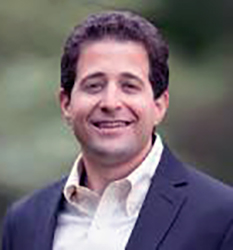 Editor’s Note: Robert Nicastro, Ph.D., is executive director of the Center for Christogenesis in Washington, DC, and a 2025 graduate of the doctoral program in theology at Villanova University, where his research focused on the work of twentieth century anthropologist and theologian Pierre Teilhard de Chardin, SJ. In this submission to Emmanuel Magazine, Dr. Nicastro invites readers to consider the extent to which the Church might need to change its traditional explanations of the Eucharist in light of what science is currently discovering about the nature of the universe. “Taken up in the Eucharist,” he writes, “the world is neither rejected nor escaped but revealed as a reality continually developing toward unity and wholeness.” MED
Introduction
For centuries, theologians have explained the Eucharist by way of various concepts and images drawn from the prevailing cosmology of their times. Generally, the sacrament has been presented as nourishing the Church within a world that is fully formed, stable and unchanging. As such, it amounted to a kind of “miraculous moment” that intruded into the ordinary circumstance of those involved in its celebration.
In recent decades, however, advances in quantum science and related fields have suggested that the world is not nearly as fixed as we once assumed. Scientists tell us that it continues to unfold over immense stretches of time toward greater complexity and consciousness. This evolutionary vision of the cosmos might seem at first to threaten the Church’s existing explanations of how the mystery of the Eucharist occupies space and time. How, one might ask, can Catholics and others maintain a eucahristic theology tethered to a static cosmology in which everything is already accomplished when science now presents us with a world still becoming? We are, after all, a church deeply shaped by tradition, often perceived as looking backward, to the past, for authoritative truth. Yet tradition, properly understood, is not repetition but living a transmission, a participation in the Spirit’s ongoing work within history. As I wish to argue here, an alternative, future-oriented conception of sacramental mystery, attentive to contemporary scientific insights, need not threaten tradition but may instead deepen the Church’s faith in s divine presence active within an unfinished world.
A Future-Oriented View of the Eucharist
One future-oriented characterization of the Eucharist was formulated some time ago by the theologian Alexander Schmemann (1921-83), who insisted that the sacrament was not one sacred practice among others but the Church’s most comprehensive revelation of reality itself. To Schmemann, the Eucharist was an action that introduced believers to the world as it truly was, not static but evolving. It did not fortify its recipients by suspending their normal state of being but revealed to them how all things are naturally evolving toward greater unity with God.
A similar model of the Eucharist drawn from an evolutionary understanding of creation had previously been developed by Jesuit scientist Pierre Teilhard de Chardin (1881-1955). Teilhard conceived of Jesus Christ not simply as a historical figure from the past but as the personalizing center of attraction and unification toward which all matter, life and consciousness were being drawn. He thus conceived of the whole universe as the “Body of Christ,” not a completed totality but a body still in formation. In Teilhard’s estimation, the material world of the senses did not stand in opposition to the spiritual aspirations of believers. It was instead the very means by which God is gradually revealed and actualized.
In the language of fellow Jesuit theologian Karl Rahner (1904-84), the world was a “real symbol” of God. From Rahner’s perspective, grace was not a divine addition to an otherwise closed system of reality in which the Church finds itself but the inexhaustible interior dimension of that reality. In such a scheme, every one of the Church’s sacraments bears an intrinsic openness to the future. The Eucharist, then, does not introduce God to a godless universe but intensifies creation’s movement toward the fullness of its divine potential. Rather than conveying a finished state of affairs, each celebration of the Eucharist propels the world toward a greater and more integrated (holier) version of itself. The Eucharist, then, is never only presence but promise.
Imagining the Eucharist Anew
The thinking of Schmemann, Teilhard and Rahner—all rightly described as “theologians of the Scientific Age”—invites the Church to scrutinize and broaden its theological imagination. For centuries, of course, the Catholic faithful were led to believe that the most fundamental truths of reality lay behind them, in origins, foundations, essences. Salvation, they were told, was a matter of recovery or return. Religion that is largely backward-looking has more to do with preservation than with anticipation and hope. Even the greatest of its sacraments is reduced to sacred memory rather than lived as participation in God’s becoming within history, divine love rising up through creation and drawing it toward ever-greater wholeness.
Rather than conveying a finished state of affairs, each celebration of the Eucharist propels the world toward a greater and more integrated (holier) version of itself. The Eucharist, then, is never only presence but promise.
We should remember that the Eucharist plays out within a universe whose movement is generative: its natural course is from matter to life, from life to consciousness, from consciousness toward freedom, responsibility, and love. Simply put, the Eucharist belongs to a world in process. It does not merely recall a sacred moment in the distant past, nor does it serve only as nourishment for the present. It anticipates a reality on the way. The ordinary elements of bread and wine make this anticipation tangible. As Schmemann repeatedly emphasized, these are not religious objects extracted from the world. They are the world, gathered in its most elemental and human forms. They carry the marks of time, labor, culture, patience, and care, as well as sun and soil, rain and seed. Within them resides the Earth’s own memory and the slow creativity of evolution.
Taken up in the Eucharist, the world is neither rejected nor escaped but revealed as a reality continually developing toward unity and wholeness. Bread and wine, therefore, become the Body and Blood of Christ not by dispensing with the material world but by disclosing its capacity for transcendence and transformation. Rahner’s claim that grace works from within nature helps name what is at stake: the sacrament intensifies the world’s own openness to God rather than interrupting it. It makes those who dwell in it aware of divine presence already stirring within creation’s unfolding. Teilhard extends this insight by situating Christ not above or beyond the evolutionary process but within it. Christ is the manifestation of divine love, or what he called “Christogenesis.”
Simply put, the Eucharist belongs to a world in process. It does not merely recall a sacred moment in the distant past, nor does it serve only as nourishment for the present. It anticipates a reality on the way.
Adopting these thinkers’ views regarding the place of the Eucharist within a cosmos-in-process necessarily requires us to ponder how Christ can be said to be “present” in the sacrament. What is “Real Presence” in a universe constantly evolving? Certainly, it is not a mystery sealed-off from its surroundings within fixed limits. It must instead be understood relationally and dynamically as Christ’s centrality within the ongoing life of the world. In a universe that continues to emerge, presence necessarily escapes possession or localization. To speak of the faithful “holding” or “receiving” Christ in the context of the Mass implies, more profoundly, that they are being drawn into Christ’s own movement of self-giving love. God is not a distant, unmoved perfection intervening episodically in history. God is the One in whom the world lives and moves, who suffers its fragmentation, receives its offerings, and lures it toward deeper unity. The Eucharist discloses this divine relationality in concentrated form: God not as static object but as living communion, perpetually giving and receiving the world into divine life.
Conclusion: The Eucharist – “Sacrament of a Church-in-Process”
Celebrations of the Eucharist are never private affairs but public acts of trust in the future of the world. Through them, the Church memorializes the Jesus Christ of history while entering more deeply into Christ’s emergence in and through the world. The Eucharist gathers the labors and sufferings of the world and offers them into the fire of divine love.
If the Eucharist is truly the sacrament of the future, its effects cannot remain confined to the sanctuary or contained within private devotion. As Schmemann made unmistakable, a Eucharist that fails to reconfigure how the Church engages the world ultimately betrays its own truth. That truth is tested beyond the altar by the degree to which it inspires ecological responsibility, for example, social reconciliation, and concrete actions of love. The Eucharist resists every spirituality of escape; it does not invite withdrawal from history but commits its participants more fully to the work of healing a fractured world. At the same time, it refuses to offer a finished answer to our lives or a closed system of meaning. Instead, it orients the Church toward a promise glimpsed but not yet complete, a world in which love, not fragmentation, has the final word. The Eucharist rekindles the Church’s most sacred memory, but more than that, it ignites participation in God’s ongoing fidelity to the world. It is its most daring act of hope and transformation, entrusting the future not to static preservation but to divine love still at work, still becoming, still drawing all things into the fullness of life.
Download a pdf version of this article here.
©2026 Emmanuel Magazine, Congregation of the Blessed Sacrament
All rights reserved.
Readers may reach editor Michael E. DeSanctis at editor@blessedsacrament.com and by mail at Emmanuel Magazine, Editorial Office, 220 Seminole Dr., Erie, PA, 16505.