


The psalmist cries out today, “Let us see your face, Lord . . .” So, what is it this writer hoped to see? What do you or I hope to see? How do I picture God?
Is it the vision that the prophet Hosea had? A God who loved me from childbirth, calling me “son” or “daughter.” A God who taught me to walk, who takes me into strong, fleshy arms, like “human cords,” “bands of love,” who — as if I were an infant — raises me to warm cheeks, and heals my every wound. This God of Hosea has a heart that is “overwhelmed,” full of “pity (that) is stirred” – when I am bad, when I miss the mark. Imagine that.
This is a God who dwells in our midst. May I suggest that from the moment of creation, this God has been present in and to everything. This is a God who is present in the other, in me, and in the connection between us. And when I go in prayer to those deepest parts of me, there is God, and that is where I meet God. Traditionally, we call this the “immanence” of God.
Jesus says in today’s Gospel, “The kingdom of heaven is at hand.” Not up or out there. Not sometime in the future. Here and now; in this present moment; in the give-and-take of our daily lives – the joys, sorrows, struggles, and successes.
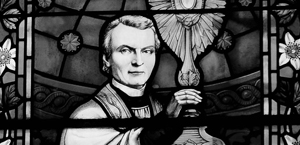
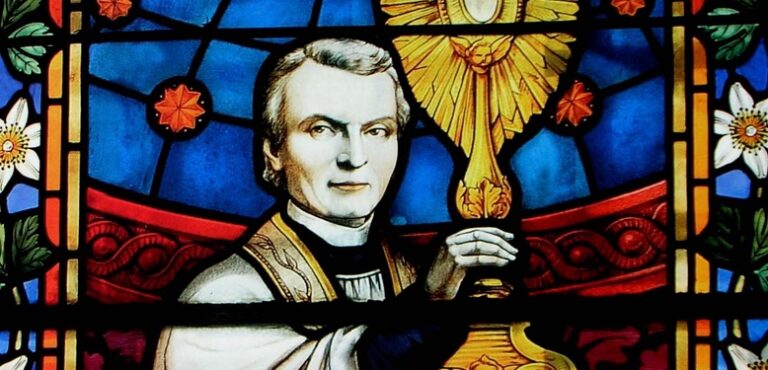
Think about when we receive the Eucharist and during those brief moments of thanksgiving prayer afterward. There we meet Emmanuel, God with us in Jesus the Christ. We are invited to become what we eat, as Saint Augustine wrote.
So, in your thanksgiving prayer today imagine the God to whom you speak?
Let Us Pray:
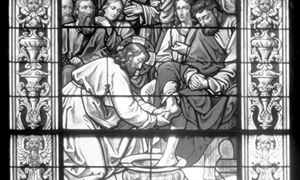
Christ has no body now but yours, no hands, no feet on Earth but yours. Yours are the only eyes with which his compassion can still look out on a troubled world. Yours are the only feet with which he can go about doing good. Yours are the only hands with which he can bring his blessing to his people. Christ has no body now on Earth but yours. (Saint Teresa of Avila)