



Blessed Be God Forever!
Jim Brown
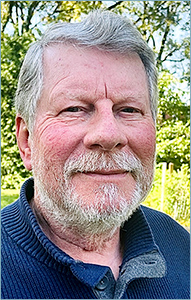 Editor’s Note: We are pleased to share this reflection by Jim Brown, who writes from Cincinnati, Ohio, and formerly served as an organizational development consultant to the Congregation of the Blessed Sacrament. Jim also acted as the first lay director of the Congregation’s Center for Eucharistic Evangelizing and was a regular contributor to the print edition of Emmanuel Magazine. Since his retirement in 2021, he has provided lay leadership for his parish’s Healthy Earth Team, which was established in 2015 by Jesuit parish Bellarmine Chapel as a response to Pope Francis’ encyclical Laudato Si’. In this submission, which invokes the spirit of St. Francis of Assisi, Jim affirms the Catholic belief in the sacramentality of the natural world, which is revealed, he argues, not only in “the many gifts . . . we can see, feel, hear, smell and taste” but also in “[its] many processes and interactions.” MED
I love nature. I love to walk in the woods. I love to be near, in, hear, smell water. I love the sound of birds singing, crickets chirping, bees buzzing. I love the sight of a harvest moon, a mountain range, a meadow of wildflowers, and any pine forest. I love to be out there with my wife, my friends, and especially with one or all of our four young grandsons. I thank God daily for the gifts of creation—in my backyard, the woods where I hike, the parks near us, the bike trails, the countless brooks, and the rivers in southwest Ohio. I make my annual retreat at a Jesuit Retreat Center on thirty-seven acres of trees, flowers, green grass and a stone’s throw from the Little Miami River.
This past year, we celebrated the 800th anniversary of Saint Francis of Assisi’s The Canticle of the Sun (also known as The Canticle of the Creatures). This revered saint is often depicted as someone who loved to talk to and be around animals. It ran far deeper than that, however, for he saw these gifts in nature from God as his family (Sister Mother Earth, Brother Sun, Sister Water, Brother Wind). Saint Francis believed every creature had its own place and purpose, its own way of manifesting our Creator God.
At every Sunday liturgy we profess the main tenets of our Catholic faith by saying either the Nicene or Apostle’s Creed. The first line we pray is, “I believe in God the Father Almighty maker (or creator) of heaven and earth.”
We read in Genesis the story of creation: from the galaxies to the oceans; from the earth to the sun and the moon; from every kind of vegetation to seed bearing plants to the tallest trees; living creatures great and small; and finally, humankind in God’s own image. “God saw all he had made, and indeed it was very good,” wrote the author of this story.
In his message for the World Day of Peace in 1990, Saint Pope John Paul II said, “The commitment of believers to a healthy environment for everyone stems directly from their belief in God the Creator . . . Respect for life and for the dignity of the human person extends also to the rest of creation, which is called to join man in praise of God” (16).
At every Sunday liturgy we profess the main tenets of our Catholic faith by saying either the Nicene or Apostle’s Creed. The first line we pray is, “I believe in God the Father Almighty maker (or creator) of heaven and earth.”
In 1979, this same pope had proclaimed Saint Francis of Assisi as the heavenly Patron of those who promote ecology. It is no wonder, then, that he also said in his 1990 address that “the ecological crisis is a moral crisis.” He reminded us that “men and women who believe in God the creator”—but Christians in particular—”realize that their responsibility within creation and their duty towards nature and the Creator are an essential part of their faith” (15). In these words, we hear that love of nature, concern for Mother Earth, and care for our common home is not peripheral to our faith, it is constituent to our Catholic faith. In his encyclical Laudato Si’ (2015) Pope Francis reinforced this idea. He wrote: “If the simple fact of being human moves people to care for the environment of which they are a part, Christians in their turn realize that their responsibility within creation, and their duty toward nature and the Creator are an essential part of their faith” (64). He urged Catholics and all people of goodwill worldwide to love nature and take care of all the gifts of creation: “For the entire material universe speaks of God’s love, his boundless affection for us. Soil, water, mountains, everything is, as it were, a caress of God” (84).
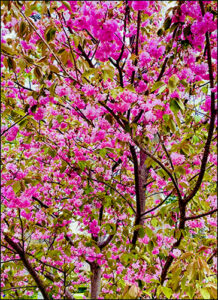 The caress of God can be found not only in the many gifts of nature that we can see, feel, hear, smell and taste but also in the many processes and interactions in nature.
At the Presentation of the Gifts at Mass we have perhaps the most consequential ecological prayer for Catholics. Most of us, however, only hear and say this prayer at weekday masses or when there is no music being sung. For the celebrant prays: Blessed are you, Lord God of all creation, for through your goodness we have received the bread we offer you, fruit of the earth, work of human hands . . . (ponder these: photosynthesis, rain from the heavens, the wheat plant, the results of thrashing seeds, the magic of good soil, the community of farmers, kneaders, sellers). The celebrant then prays one of those cornerstones of our faith: it will become for us the bread of life.
And then he says: Blessed are you Lord God of all creation, for through your goodness we have received the wine we offer you, fruit of the earth, work of human hands . . . (ponder these: the right terroir or natural environment, photosynthesis, the sun, rain from the heavens, nutrient rich soil, yeasts, fermentation, sugars, bacteria, tannins, the magic of wine cellars, the art of growing different grapes, and, the community of growers, winemakers, harvesters, tasters, sellers, etc.) The celebrant then prays, it will become our spiritual drink—another cornerstone.
The congregation then responds to each of these prayers, blessed be God forever. Thank you, Creator God. Your first act of love for us was in all the beauties in nature, your original blessing. And with the help of the sciences, we can understand even more clearly all the miraculous processes in nature that leave us in awe.
The caress of God can be found not only in the many gifts of nature that we can see, feel, hear, smell and taste but also in the many processes and interactions in nature.
In its essence, the Eucharist is a prayer of thanksgiving (from the Greek word eucharisteo – “to give thanks”). At each Mass, we are invited to be thankful for so many gifts in our lives. For nature lovers, there is no end to these blessings in the sights, sounds, tastes, and even the feel of the soil beneath our feet. The poet Gerard Manley Hopkins, SJ, begins his poem God’s Grandeur with the line, The world is charged with the grandeur of God. (And then he laments the invention of shoes with this line: the soil is bare now, nor can foot feel, being shod.)
And so, we come back to that core belief pronounced in the creeds at the Sunday liturgy, that God is the maker, the creator of heaven and earth and all that make up the heavens and the earth. Let me suggest that we add from time to time a prayer of petition whereby we ask for the grace to reconcile our relationship with God, creation and humanity and to stand in solidarity through our actions to care for Sister Mother Earth, our “Common Home.”
At the “Raising Hope” Conference in Rome this past October on the 10th anniversary of Laudato Si’, Pope Leo XIV said this: “People of faith cannot love God while despising his creatures, and people cannot call themselves Christians without caring for everything fragile and wounded, including the earth.” He told the climate activists, political and religious leaders: “there is no room for indifference or resignation.” He concluded his address with these words: “God will ask us if we have cultivated and cared for the world that he created, for the benefit of all and for future generations, and if we have taken care of our brothers and sisters. What will be our answer?”
At the end of the Mass, we are missioned to “go in peace, glorifying the Lord by your life.” From an ecological spirituality championed by our recent popes, let us go forth to love God, our neighbor as ourselves, and all of creation.
Download a pdf version of this article here.
©2026 Emmanuel Magazine, Congregation of the Blessed Sacrament
All rights reserved.
Readers may reach editor Michael E. DeSanctis at editor@blessedsacrament.com and by mail at Emmanuel Magazine, Editorial Office, 220 Seminole Dr., Erie, PA, 16505.